
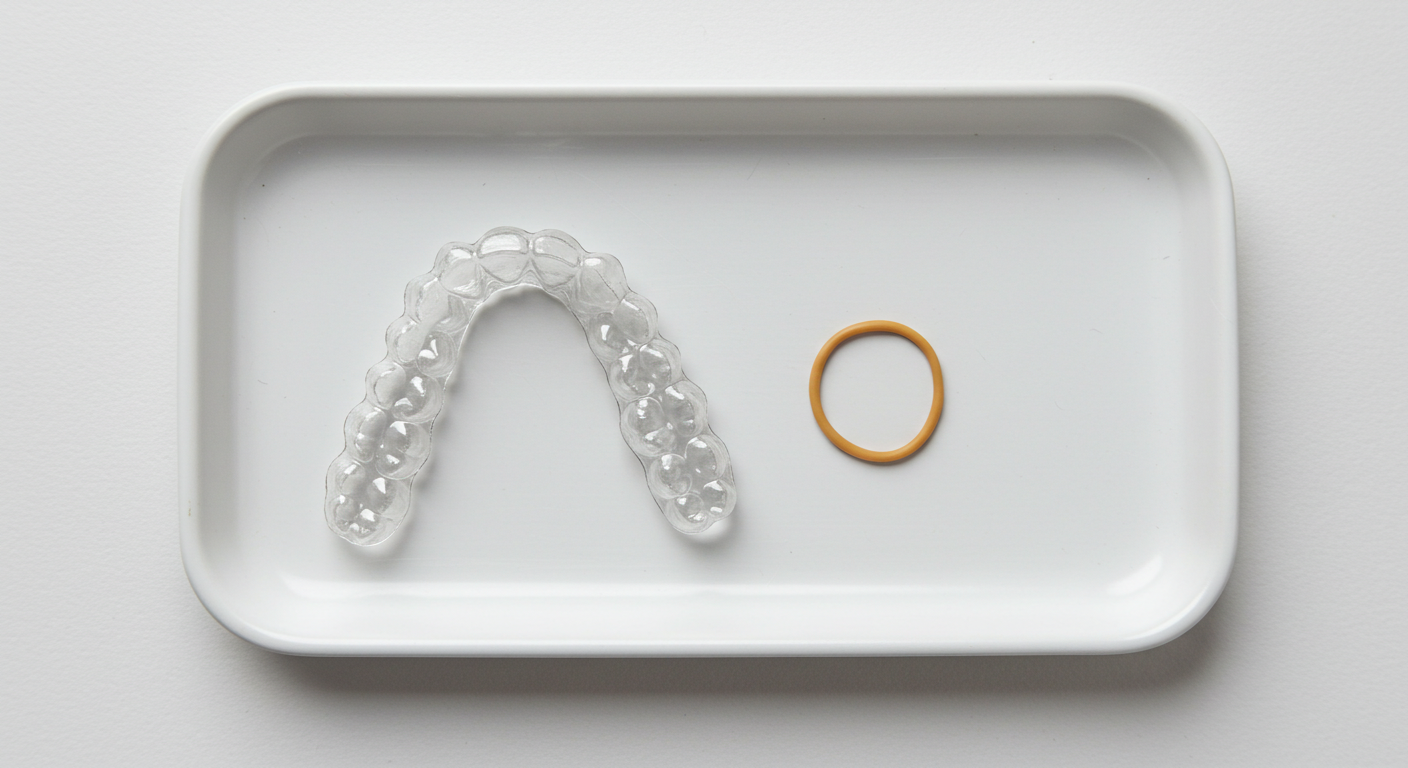
What are Invisalign Rubber Bands?
Invisalign rubber bands might seem small, but they play a significant role in achieving that perfect smile. Knowing why they are used and how they help is important for anyone receiving treatment.
This guide dives into the types of rubber bands, how they work with your aligners, and essential usage guidelines. Plus, we’ll address common issues you might face and how to tackle them. Curious about how these tiny bands can make such a big difference? Let’s explore!
What are Invisalign Rubber Bands?
Invisalign rubber bands are small elastic bands used in conjunction with clear aligners to apply additional force on the teeth.
These bands are typically made from latex or non-latex materials to accommodate patients with allergies. Aligners are designed to shift teeth into proper positions more quickly.
For example, using heavier gauge bands can target specific teeth, aligning them more quickly. To use rubber bands in your treatment, speak to your orthodontist about the right size and where to position them. Regular changes may be needed to maintain proper alignment while using Invisalign.
Purpose and Benefits
The primary purpose of rubber bands in Invisalign is to facilitate specific tooth movements, improving overall treatment efficiency by up to 30%.
Rubber bands are important for fixing bite problems and improving alignment by using gentle pressure. For instance, they can help shift molars into position, enhancing jaw alignment while achieving desired aesthetic outcomes.
They help with the entire treatment process, enabling aligners to address various problems. To maximise results, it is essential to follow the orthodontist’s instructions on wear time, typically ranging from 12 to 24 hours a day, ensuring the best progress within the treatment timeline.
Types of Rubber Bands Used in Invisalign

Invisalign uses different elastic bands made to meet specific orthodontic requirements and treatment objectives.
Elastic Bands
Elastic bands are the most common type of rubber band used in Invisalign, available in different strengths to apply the necessary force for tooth movement.
These elastic bands differ from traditional rubber bands in their design and purpose. Unlike ordinary rubber bands, orthodontic elastic bands are designed to exert exact pressure on teeth, allowing specific adjustments.
Common applications include aligning teeth, closing gaps, and correcting bite issues. For example, a patient may use Class II elastics to help reposition the upper teeth back over the lower teeth. Treatment plans often prescribe varying thicknesses and placements to tailor the force to each patient’s needs.
Different Sizes and Strengths
Invisalign rubber bands come in various sizes and strengths to cater to specific patient needs, ensuring optimal effectiveness.
These variations significantly impact treatment plans. For instance, lighter rubber bands (often referred to as Class I) are recommended for minor adjustments, providing gentle pressure for subtle shifts.
In contrast, heavier bands (Class II and III) are used for more challenging movements, such as correcting how teeth come together and aligning teeth with more force. Patients typically experience quicker results when the right band strength is paired with their individual orthodontic goals, leading to a more personalised and effective experience.
How Rubber Bands Work with Invisalign
Elastic bands work with Invisalign to exert pressure necessary to shift teeth into the right place, improving how the aligners perform.
Mechanics of Movement
The mechanics of tooth movement with rubber bands involve the application of elastic force, which alters the position of teeth over time.
This force is generated as the rubber band stretches and contracts, exerting pressure on specific teeth.
For effective results, orthodontists usually recommend wearing rubber bands in a specific configuration, such as from the upper canine to the lower molar, which encourages the desired directional movement.
For the best results, follow your orthodontist’s advice on how many hours to wear your braces—typically 14-16 hours daily.
Having regular dentist check-ups helps keep the treatment on track by using the right pressure for better tooth movement.
Role in Treatment Plan
Using elastics with Invisalign helps shift teeth correctly, as dentists suggest.
Orthodontists assess each patient’s specific alignment issues to determine the type and placement of elastics, often consulting a 3D treatment plan.
Using elastics can help move certain teeth faster, accelerating treatment.
Elastics are typically worn in various configurations, such as triangular or rectangular shapes, to target different areas—such as closing gaps or correcting bite issues.
Regular check-ups confirm that the teeth are shifting as expected and on time.
Usage Guidelines
Knowing how to use elastic bands correctly is important for achieving the best results in orthodontic treatments.
When to Wear Rubber Bands
Patients are typically advised to wear rubber bands during both daytime and nighttime, ideally for 20-22 hours a day.
To manage compliance effectively, establish a routine. Set alerts on your phone or use a calendar app to notify you when to put on or check your rubber bands.
Keep a visual cue, like a sticky note on your mirror or workspace, to reinforce this habit. Consider using a tracker app designed for orthodontic care, such as MyOrthodontist, which allows you to log wear time and receive notifications.
This method keeps things consistent and encourages you by keeping track of your progress towards treatment goals.
How Long to Wear Them Each Day
Wearing rubber bands for the suggested amount of time is important because using them regularly can make the treatment much quicker, reducing it by months in some cases.
To achieve good results, wear rubber bands for at least 20 hours each day. Set a schedule that fits your daily routine; for instance, wear them from morning until bedtime, only removing them during meals and when practising oral hygiene.
Use tools like a daily reminder app to help maintain regularity. Missing even a few hours can extend your treatment timeline, so prioritise adherence. Communicate with your orthodontist regularly for adjustments based on your progress, ensuring you stay on track for a successful outcome.
Maintenance and Care
Correct care of elastic bands is important for them to work well in orthodontic treatment.
Cleaning Rubber Bands
Cleaning rubber bands involves rinsing them before inserting them back into the mouth, maintaining good oral hygiene practices.
- To effectively clean rubber bands, start by rinsing them under warm water for 30 seconds to remove any food particles.
- Next, use a gentle toothbrush or a soft cloth to scrub the bands lightly, ensuring you won’t damage them.
- For deeper cleaning, consider a mixture of one part white vinegar to three parts water; soak the bands for about 10 minutes before rinsing again.
- This method is safe and minimises the risk of damage while ensuring your rubber bands are hygienic and ready for use.
When to Replace Rubber Bands
Orthodontists typically recommend changing rubber bands every 1-2 weeks, or whenever they get stretched or lose their stretchiness.
To achieve the best results, check the rubber bands regularly to see if they are worn out. For instance, if you notice that they appear thin, shiny, or have lost their initial tension, it’s time for a change.
Speak to your orthodontist to find out when you should replace items based on your treatment plan. Storing rubber bands in a specific box keeps them organised and means you always have some spares ready. Following these simple guidelines can greatly improve the results of your orthodontic treatment.
Common Issues and Solutions

Rubber bands work well, but patients might encounter typical problems that can be easily fixed.
Discomfort and Irritation
Discomfort and irritation from rubber bands can usually be managed with over-the-counter pain relief and adjustments by the orthodontist.
Along with pain relief, consider using orthodontic wax to cushion areas where rubber bands rub against your gums. This creates a protective barrier, minimising irritation.
Regular saltwater rinses can also soothe sore spots and keep your mouth clean. If discomfort persists, reach out to your orthodontist for adjustments; they may tighten or reposition the rubber bands for better comfort and efficacy.
Talking openly about your experience will help keep your treatment on track.
Rubber Bands Breaking or Stretching
Rubber bands often break or stretch due to improper fitting or excessive wear, necessitating regular checks and timely replacements.
To manage the longevity of rubber bands, schedule inspections at least once a month. Look for signs of discolouration or loss of elasticity.
When replacing, choose the right band based on how you will use it: stronger bands for tough jobs and lighter bands for easy tasks.
Tools like a rubber band cutter can make the removal process easier, while storage options like moisture-resistant containers help prevent damage.
Having a few extra bands of different sizes means you can quickly swap out old ones when needed.
Importance of Compliance
Following rubber band guidelines can make the treatment work better, which might shorten the treatment time significantly.
To get the most out of rubber bands, patients should follow their orthodontist’s instructions carefully. This includes wearing rubber bands for the prescribed hours each day—typically 14-16 hours.
Monitoring compliance can be made easier with tools like a mobile app or a simple daily checklist. Staying in regular contact with your orthodontist is important. Arrange monthly appointments to discuss how things are going and resolve any issues.
If discomfort arises, your orthodontist can give solutions, ensuring your treatment remains on track.
Frequently Asked Questions
What are Invisalign rubber bands?
Invisalign rubber bands, also known as elastics, are small, stretchy bands that are used in conjunction with Invisalign aligners to correct issues with the bite. They work by applying pressure on specific teeth to shift them into the desired position.
Why are Invisalign rubber bands used?
Invisalign rubber bands are used to correct bite issues and achieve proper tooth alignment. They can also be used to close gaps between teeth, improve jaw alignment, and fix overbites or underbites.
Are Invisalign rubber bands necessary for treatment?
Invisalign rubber bands are not always necessary for treatment. They are usually suggested for situations needing complicated tooth adjustments, like fixing a serious overbite or underbite. Your orthodontist will determine if elastics are necessary for your specific treatment plan.
How often do I need to wear Invisalign rubber bands?
The frequency of wearing Invisalign rubber bands will depend on your specific treatment plan. Generally, they should be worn for at least 22 hours per day, only removing them to eat and brush your teeth. Your orthodontist will give you specific instructions on when and how long to wear your elastics.
What happens if I don’t wear my Invisalign rubber bands as directed?
If you do not wear your Invisalign rubber bands as directed, it can prolong your treatment time and potentially affect the overall results. Your teeth may not move in the desired way, and you may need to wear your aligners longer than originally planned. It is essential to follow your orthodontist’s instructions for the best results.
Can I eat with Invisalign rubber bands on?
No, you should not eat with Invisalign rubber bands on. They can easily break or get dislodged while chewing, and it is important to keep them clean and free of food debris. It is best to remove the elastics while eating and put them back on after brushing your teeth.
Leave a Reply