

How Often Should You Whiten Your Teeth?
A bright smile can light up a room, but how often should you whiten your teeth to keep that sparkle safely and effectively? Knowing how to achieve a bright smile while keeping your teeth healthy is important.
From professional treatments to at-home solutions, various methods and lifestyles influence whitening frequency. This guide explains why teeth whitening is important, looks at popular methods, and discusses the dangers of whitening too much. Prepare to find your way to a bright smile!
Importance of Teeth Whitening
Whiter teeth can make your smile look better, which can help you in social situations and at work.
Research indicates that 70% of individuals feel more confident after undergoing whitening treatments. This increase in self-confidence often leads to more interesting discussions and being more confident at work.
To achieve these results, consider professional treatments like in-surgery bleaching, which can yield noticeable effects in just one session, or at-home kits containing carbamide peroxide, which offer gradual but effective whitening.
Using whitening toothpaste regularly can help keep your teeth white, which can improve your self-esteem and relationships.
Common Whitening Methods
The most common teeth whitening methods include professional treatments, over-the-counter products, and natural remedies, each with unique benefits and limitations.
Professional whitening, typically done in a dentist’s surgery, offers immediate results but can be costly, usually ranging from £300 to £1,000.
Over-the-counter products like whitening strips or gels are more affordable, ranging from £20 to £50, but may take longer to show results, around two weeks.
Natural treatments like bicarbonate of soda or coconut oil are affordable and mild, but their results differ greatly and may require more time.
In the end, your decision will depend on your budget, schedule, and specific needs.
Factors Influencing Whitening Frequency

How often you whiten your teeth depends on the method used and your specific dental health.
Type of Whitening Method
Different ways to whiten teeth suggest certain times between treatments; for example, professional procedures are typically advised every 6-12 months.
Over-the-counter (OTC) products, such as whitening strips, recommend a shorter frequency of 2-3 weeks for optimal results.
You can use natural methods like oil pulling or a bicarbonate of soda paste each week to keep your teeth white without using strong chemicals. It’s a good idea to consult a dentist before you begin any whitening treatment. They can offer specific advice based on your dental health.
Maintaining good oral hygiene habits alongside these methods can greatly improve how effective the whitening treatments are.
Individual Dental Health
Personal dental health, including enamel condition and sensitivity, plays a critical role in determining how frequently one can whiten their teeth safely.
If your tooth enamel is healthy, it is generally safe to whiten your teeth every four to six months. Those with enamel wear or increased sensitivity should consider longer intervals—potentially up to a year between treatments.
It’s essential to consult your dentist, who can recommend safe products based on your enamel condition. For example, using a remineralising toothpaste like Sensodyne can help reduce sensitivity before whitening. Professional treatments carried out in a dental practice can offer safer and more effective results that suit individual needs.
Diet and Lifestyle Choices
Diet and lifestyle choices significantly impact the effectiveness and the frequency required for teeth whitening treatments.
Common culprits include coffee, tea, and red wine, which can lead to significant staining over time. Try herbal teas or white wine instead; they usually do not stain as much.
Smoking contributes to staining; quitting or reducing tobacco use can markedly improve your oral aesthetics.
To maintain results from whitening treatments, regular use of whitening toothpaste, along with visits to your dentist for check-ups, can minimise the buildup of stains and keep your smile looking bright.
Professional Teeth Whitening
Professional teeth whitening is a popular and successful technique that generally produces fast results, which can remain visible for several months.
Frequency Recommendations
Dentists usually recommend professional teeth whitening every 6 to 12 months to get the best results and prevent enamel damage.
Apart from standard whitening treatments, patients who often drink stain-causing beverages like coffee or red wine might benefit from more frequent cleanings.
People who consume a lot of coffee should arrange cleanings every three months to handle surface stains effectively. Using whitening toothpaste can also help maintain results between treatments.
Products like Crest 3D Whitestrips can provide an effective at-home option for touch-ups. Always consult with your dentist to customise a regimen that suits your individual dental health needs.
Expected Results and Maintenance
Results from professional whitening treatments can be observed immediately, but maintaining that brightness requires diligent oral care routines.
Brush your teeth with whitening toothpaste daily to get rid of stains on the surface and maintain a bright smile. Consider using mouthwash containing hydrogen peroxide for extra whitening benefits.
Go to your dentist twice a year to have your teeth cleaned and checked for stains.
Avoid foods and drinks that can stain your teeth, such as:
- Red wine
- Coffee
- Dark berries
or rinse your mouth with water immediately after consumption. Refresh your whitening treatment twice a year to maintain your results.
At-Home Whitening Solutions
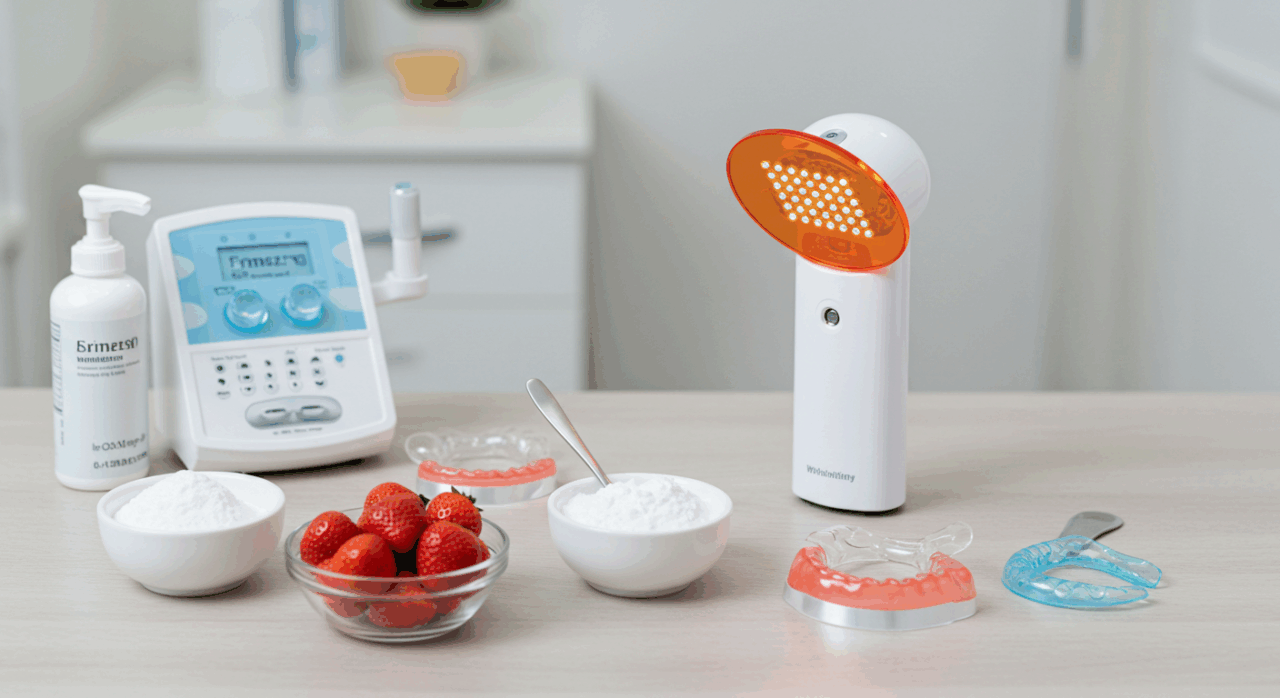
Home whitening products are simple to use and cost-effective, which is why many people choose them to brighten their teeth without going to the dentist.
Over-the-Counter Products
Over-the-counter whitening products include strips, gels, and toothpastes, providing users with various options to suit their preferences and budgets.
A common choice is Crest 3D Whitestrips, costing £44.99 for 20 uses. They are easy to use and work well, needing about 30 minutes each time. Users appreciate the gradual whitening, reporting results in as little as three days.
Alternatively, AuraGlow Teeth Whitening Gel (£39.99) offers a more customisable experience with a mouth tray, allowing users to adjust application time based on their sensitivity levels. People usually choose between strips for fast application and gels for customised treatments, depending on their lifestyle.
Both can lead to noticeable results, depending on types of tooth stains.
Natural Whitening Remedies
Many people prefer natural methods like bicarbonate of soda and coconut oil for teeth whitening because they are affordable and considered safe.
Bicarbonate of soda can be combined with water to make a paste. Apply it directly to your teeth for about two minutes, twice a week. Research shows it can effectively reduce surface stains.
Coconut oil, known for its antibacterial properties, can be used in a method called oil pulling; swill a tablespoon in your mouth for 15-20 minutes daily.
Other simple options include using hydrogen peroxide diluted with water as a mouthwash or adding activated charcoal to your toothbrush.
These methods improve smiles and support oral health.
Risks of Over-Whitening

Although teeth whitening can make smiles brighter, overdoing it can lead to serious problems such as sensitive teeth and damage to enamel.
Potential Side Effects
Common side effects of over-whitening include increased tooth sensitivity and potential enamel erosion, which can lead to longer-term dental issues.
Approximately 25% of users report heightened sensitivity following aggressive whitening treatments. To mitigate this risk, consider using sensitivity toothpaste, such as Sensodyne or Colgate Sensitive, which can help shield nerves from harsh ingredients.
Limit whitening sessions to once a month and opt for lower-concentration products to gradually achieve the desired results. Consulting a dentist before you begin any teeth whitening process helps you use safe techniques that are right for your dental health, keeping your teeth and smile healthy.
Consultation with Dental Professionals
Talk to your dentist before starting any teeth whitening treatment to make sure it is safe and effective.
During your consultation, ask specific questions to gauge the best approach for your needs. For example, inquire about the safety of a particular whitening product and whether it is suitable for your dental health.
Discuss your dental history, particularly any past procedures or sensitivity issues, as these can impact whitening choices. Request an examination of your teeth and gums to confirm they are in good condition for the procedure.
A professional opinion can help you avoid potential adverse effects and select a method, such as custom trays or in-clinic treatments, that aligns with your goals.
Finding the Right Balance
Finding the right mix of professional and home whitening methods can help keep your smile bright.
To create a customised whitening plan, begin by arranging a dentist appointment for a specialist consultation and thorough cleaning.
For maintaining your teeth at home, use a whitening toothpaste and consider using trays made for you, along with gel recommended by your dentist. Regularly monitor your results and adjust your routine as needed; for instance, if you notice sensitivity, reduce the frequency of gel application.
It’s important to brush and floss your teeth every day to keep them clean. Continue brushing and flossing to improve your whitening results and maintain a bright smile.
Frequently Asked Questions
How Often Should You Whiten Your Teeth?
The frequency of teeth whitening varies depending on the method used and the condition of your teeth. To keep your smile bright and white, it’s good to whiten your teeth every 6 months.
How often can I use at-home whitening kits?
You can use at-home whitening kits every 3-6 months. This depends on how strong the product is and how sensitive your teeth are. It is important to follow the instructions and not overuse the product to prevent damaging your teeth.
Can I whiten my teeth too often?
Yes, over-whitening can lead to tooth sensitivity and damage to the enamel. It is important to follow the recommended frequency and not exceed it without consulting a dentist.
How often should I get professional teeth whitening done?
You can get your teeth professionally whitened every 1-2 years, based on their condition and how stained they are. It is best to consult with your dentist to determine the right frequency for your specific needs.
How often should I brush my teeth after whitening?
It is recommended to wait at least 30 minutes after whitening before brushing your teeth. This allows the enamel to harden and prevents any damage from the abrasive action of brushing.
How long does the whitening effect last?
The longevity of the whitening effect varies from person to person, but in general, it can last anywhere from 6 months to 2 years. It also depends on your dental hygiene habits and consumption of staining foods and drinks.
Leave a Reply