

What Is a Root Filling and When Do You Need One?
Imagine facing a painful toothache that threatens your smile. Root filling could be the answer, preserving your tooth while preventing further infection. Knowing this important dental procedure is key to keeping your mouth healthy.
We will look into what root filling involves, why it’s important for dental health, and the materials that are used in the process. We’ll also talk about the advantages, possible risks, and tips for recovery to help you heal well. Read on to learn how root filling can preserve your teeth.
Definition and Purpose
Root filling, also known as endodontic therapy, involves the removal of infected pulp tissue and sealing the root canals to prevent reinfection.
The procedure begins with an initial examination and X-ray to assess the extent of the infection. Local anaesthesia is given to keep the patient comfortable.
Next, the dentist creates an opening in the tooth to access the pulp chamber, where infected tissue is carefully removed using specialised instruments. Once the canals are cleaned of bacteria, they are filled with gutta-percha, a material that works well with the body, and sealed to prevent any new infections.
Post-treatment, a follow-up appointment is essential for monitoring the healing process and determining if further restoration, such as a crown, is needed.
Importance in Dental Health
Proper root filling is essential for maintaining oral health, significantly reducing the risk of tooth loss and infection recurrence.
Research indicates that properly filling the root can increase the chance of keeping a tooth by as much as 90%, reducing issues such as developing an abscess. For instance, when regularly monitored, patients who received quality endodontic treatments reported fewer instances of recurrent decay.
Practising good oral hygiene post-treatment, such as utilising antimicrobial mouth rinses and brushing effectively, further supports these outcomes. Seeing dentists regularly for follow-up visits helps catch problems early, protecting dental health.
Procedure Overview

The root canal procedure includes important steps to treat infected teeth effectively.
Initial Assessment
The first check-up involves thorough tests, including dental X-rays, to check how much the pulp is infected and help decide on the treatment.
Other diagnostic tools play a critical role in treatment planning. Tests on the pulp check how it reacts to heat and electric signals to find out if the pulp is alive.
Cone beam computed tomography (CBCT) provides 3D imaging, revealing complex root canal systems that standard X-rays cannot show. These tools help dentists make a personalised treatment plan that leads to successful care.
For instance, if X-rays reveal extensive infection but pulp testing indicates the tooth is still alive, you might choose pulpotomy instead of removing the tooth.
Anaesthesia and Preparation
Proper anaesthesia management is essential because it keeps the patient comfortable and reduces pain during the root filling procedure.
Local anaesthesia is the most common approach, primarily using lidocaine to numb the specific area of treatment. Patients typically receive the anaesthetic via injection, providing immediate relief for approximately one to two hours.
For patients with anxiety, sedation techniques, such as nitrous oxide or oral sedation, can be beneficial. Nitrous oxide, or laughing gas, allows patients to remain conscious while feeling relaxed. Alternatively, oral sedation means prescribing a mild sedative, enabling patients to feel drowsy yet still responsive.
Discussing these options with the patient before the procedure helps tailor the best approach for their needs.
Cleaning the Root Canal
Cleaning the root canal involves mechanical shaping and disinfection using specialised instruments and antimicrobial solutions.
The process usually begins with rotary files that are essential for shaping the canal and cleaning out debris.
After shaping, the canal must be thoroughly disinfected using an antimicrobial solution, such as sodium hypochlorite or chlorhexidine, to eliminate bacteria. All tissue or debris must be cleared to prevent reinfection.
Using a rubber dam during the procedure helps maintain a sterile environment, protecting the tooth and surrounding areas from contamination.
Materials Used in Root Filling
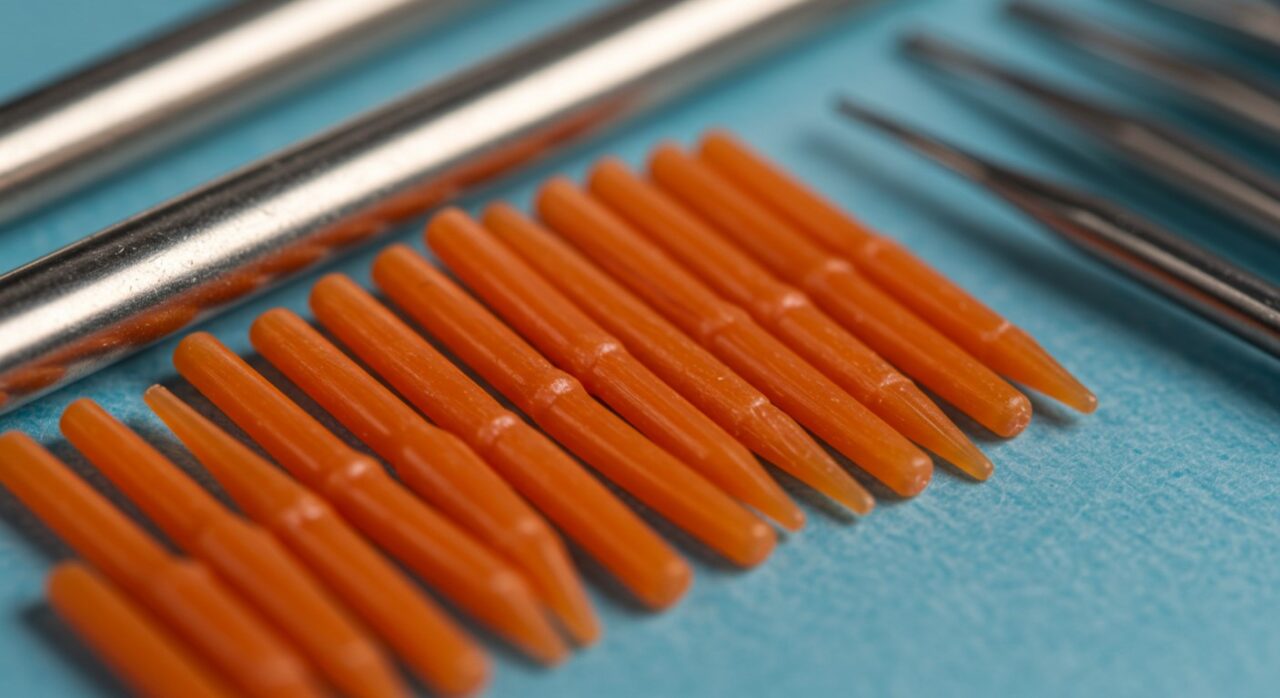
Choosing the right materials to fill roots is important for how long they last and how well they function with the body.
Common Filling Materials
Gutta-percha remains the gold standard for root filling materials due to its excellent sealing properties and biocompatibility.
Other materials are also used based on specific clinical needs. Resilon, for example, is a thermoplastic synthetic polymer that offers improved adhesion properties but can be more challenging to work with.
Calcium silicate materials, such as BioRoot RCS, aid healing and are better compatible with the body, but they require careful application techniques.
Each material has its advantages and disadvantages, so the choice often depends on factors such as the complexity of the case, the clinician’s preference, and the properties desired for the specific clinical situation.
Biocompatibility Considerations
Choosing materials for root fillings must consider how they interact with the body to prevent harmful reactions in patients.
For instance, gutta-percha is a widely used material due to its excellent biocompatibility and minimal tissue irritation. A study published in the Journal of Endodontics (2022) demonstrated that it caused significantly fewer inflammatory responses compared to zinc oxide-eugenol.
Bioceramics, such as BioRoot RCS, have shown promising results in clinical settings, exhibiting both sealing ability and biocompatibility. Their use can result in a favourable environment for healing, as they actively promote cell migration and tissue regeneration.
Choosing materials such as gutta-percha and bioceramics is important for good patient outcomes.
Benefits of Root Filling

Root filling offers several benefits, primarily focused on preserving natural teeth and stopping more dental problems.
Preservation of Natural Teeth
One of the primary benefits of root filling is the preservation of natural teeth, significantly reducing the need for extractions.
Research indicates that root fillings can succeed up to 95% of the time when done properly, offering a strong option instead of removing the tooth. This process involves removing the infected pulp and sealing the tooth, which relieves pain and stops further infection.
In fact, patients with root fillings enjoy a similar longevity of their teeth compared to untreated teeth. Looking after your teeth and seeing the dentist often can help keep teeth with root fillings healthy and working properly in your mouth.
Prevention of Infection
Root filling prevents infection from returning, which is important for keeping your mouth healthy over time.
The process involves sealing the root canals with materials such as gutta-percha, which forms a barrier against bacteria. Studies show that successful root canal treatment leads to an infection-free outcome in over 90% of cases, significantly reducing the risk of reinfection.
Using antimicrobial agents during the procedure can further decrease bacterial load. Regular follow-ups and X-rays after treatment help identify any problems early, which improves patient outcomes and satisfaction.
Keeping your mouth clean is important for ensuring root fillings work effectively.
Potential Risks and Complications

Although root filling has advantages, it can also involve risks and problems that professionals need to manage properly.
Failure of the Procedure
Procedure failure can occur in 5-10% of cases, often due to inadequate cleaning or complex root anatomy.
To reduce these risks, careful evaluation and modification of techniques are essential.
- Begin by utilising advanced imaging, such as CBCT, to better visualise root complexity and canal systems.
- For cleaning, use rotating equipment along with manual techniques to make sure all areas are cleaned thoroughly.
- Regularly change your irrigation methods; using sodium hypochlorite first and then EDTA can make cleaning more effective.
- Taking detailed notes while working can help identify repeated problems, which lets you enhance your methods for later situations.
Post-Procedure Discomfort
Post-procedure discomfort is common but typically manageable with appropriate pain management strategies like NSAIDs.
Patients may experience pain for a few days following root filling, often manifesting as mild to moderate sensitivity. To help with this, you can use over-the-counter medicines like ibuprofen or paracetamol. Make sure to follow the dosing instructions on the package.
Applying a cold compress to the outside of the cheek can further reduce swelling and discomfort. It’s important to schedule a follow-up appointment within a week to assess healing and address any lingering pain, ensuring a smooth recovery process.
Aftercare and Recovery

Looking after yourself after treatment is important to help you recover and avoid issues after root canal procedures.
Follow-Up Appointments
Regular follow-up appointments are critical to assess healing and the success of the root filling, typically scheduled after 1-2 weeks.
During these visits, dentists evaluate both the treated area and overall oral health. Key indicators they monitor include pain levels, swelling, and signs of infection.
It’s also a chance to address any concerns you may have, such as sensitivity or discomfort. If problems occur, such as ongoing pain or unexpected swelling, the dentist might suggest imaging tests to check that healing is on track.
Staying diligent with these appointments helps mitigate risks and supports a smoother recovery process, ensuring your dental health is on track.
Oral Hygiene Tips
Looking after your teeth following the procedure is necessary. We suggest brushing softly and rinsing with saltwater.
Along with these practices, it is important to avoid certain foods that could irritate the treated area, such as hard, crunchy, or sticky items.
Use a soft-bristled toothbrush and brush gently to avoid causing discomfort. Rinsing your mouth with a saline solution twice a day can help reduce inflammation and promote healing.
Staying hydrated will support saliva production, which naturally helps combat bacteria. If you experience any unusual symptoms such as excessive pain or swelling, do not hesitate to contact your dentist for further guidance.
Frequently Asked Questions
What is a root filling?
A root filling, also called root canal therapy, is a dental treatment for a tooth that is badly harmed or infected. It involves removing the infected or damaged pulp inside the tooth and filling the space with a special material to restore the tooth’s structure and function.
How is a root filling performed?
A root filling is performed by a dentist or endodontist. The procedure involves numbing the affected tooth and surrounding area with local anaesthesia, creating an opening in the tooth to access the root canal, removing the infected or damaged pulp, and filling the space with a special material. The tooth is then sealed with a filling or crown to protect it from further damage.
Why would I need a root filling?
If you have a deep cavity, a cracked or broken tooth, an injury to the tooth, or a serious infection, you might need a root filling. These issues can cause the pulp inside the tooth to become inflamed or infected, which can be very painful. A root filling can relieve the pain and save the tooth from being extracted.
What are the signs that I may need a root filling?
Signs that you might need a root filling are intense tooth pain, ongoing sensitivity to heat or cold, swelling near the tooth, tooth colour changes, and a bump on the gum close to the tooth. However, only a dentist can decide if a root filling is needed after a thorough examination.
Is a root filling painful?
The procedure itself is not painful as it is performed with local anaesthesia. However, you might feel some pain or sensitivity after the procedure, which can be eased with over-the-counter painkillers. Follow the instructions from your dentist to heal properly.
Are there any complications associated with a root filling?
In rare cases, a root filling may fail and the infection may return. This can be due to the presence of additional canals in the tooth that were not detected during the initial procedure, or because the tooth was not properly sealed. If this happens, the root filling can be repeated or other treatment options may be considered.
Leave a Reply